Your Website Has Hundreds of Pages. Why Are Only a Few Getting Indexed?
I have worked on websites where hundreds of URLs existed, but only a small portion appeared in search results. The interesting part was that many of those missing pages were perfectly accessible in a browser. They loaded correctly, displayed their content, and seemed completely normal to anyone visiting the website.
This is where things become confusing for developers. A page working correctly in a browser does not automatically mean that a search engine has discovered, crawled, and indexed it.
For developers working on Website Development and SEO, understanding this distinction is important. Indexing problems are often connected to technical decisions made during development, not just the content published on a website.
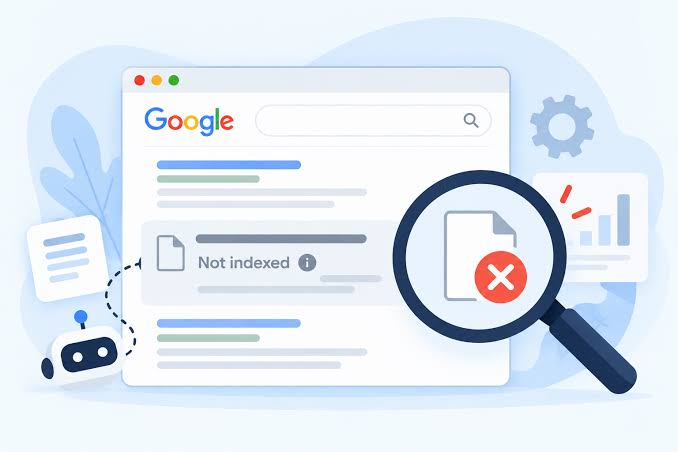
First, understand where the problem actually exists
Before fixing anything, I would separate crawling from indexing.
Crawling means that a search engine discovers a URL and requests its content. Indexing happens afterward, when the search engine processes that content and decides whether it should be included in its search index.
A URL can be discovered without being crawled. It can also be crawled without being indexed.
This distinction matters because developers often start changing content when the actual problem is that search engines cannot properly access the page.
Google explains these stages in its guide to how Search works. Understanding the process makes debugging much easier because it helps narrow down where things are going wrong.
Your pages might not be connected properly
One surprisingly common problem is poor internal linking.
Imagine an application that generates hundreds of product pages dynamically. Every page has a unique URL, and opening those URLs directly works perfectly.
But there is no category page linking to those products, no navigation pointing toward important sections, and no crawlable links connecting the pages to the rest of the website.
From a developer's perspective, all the pages exist. From a crawler's perspective, many of them may be difficult to discover.
This is why internal linking should not be treated as something added after development is complete.
Important pages should be connected through meaningful navigation, category pages, and relevant contextual links. A page that matters to the business should not depend entirely on someone knowing its exact URL.
A sitemap can help, but it will not fix everything
Whenever indexing problems come up, someone usually suggests submitting a sitemap.
That is reasonable, especially for larger websites with frequently changing content. A sitemap helps search engines discover URLs that might otherwise be difficult to find.
However, there is an important limitation.
Submitting a URL in a sitemap does not guarantee that the URL will be crawled or indexed. It is a discovery signal, not an indexing command.
I would also check whether the sitemap contains URLs that should actually appear in search results.
For example, including filtered product URLs, duplicate pages, redirected URLs, or pages marked as non-indexable can make the sitemap unnecessarily messy.
Google's sitemap documentation explains when sitemaps are useful and what they can realistically accomplish.
Sometimes the page is telling search engines not to index it
This is one of those technical mistakes that can be surprisingly difficult to notice.
A page may load correctly, return a successful response, and display all its content while still carrying a noindex directive.
That directive tells search engines not to include the page in their index.
It can appear through an HTML robots meta tag or an HTTP header. Developers sometimes introduce these settings during staging, testing, or template configuration and forget to remove them before deployment.
I would always inspect the rendered HTML and response headers when investigating missing pages.
Also, remember that robots.txt and noindex are not interchangeable. Blocking a URL from crawling does not necessarily remove it from search results, because search engines might still discover the URL through other links.
Duplicate pages can create another problem
Large websites frequently generate multiple URLs that display essentially the same content.
This can happen through URL parameters, product filters, category variations, trailing slashes, or different URL structures pointing toward identical pages.
For example, the same product might be accessible through several URLs depending on how a visitor navigates the website.
Search engines may recognize these URLs as duplicates and select one representative version for indexing.
This is where canonical tags become useful.
A canonical tag helps communicate which URL should be treated as the preferred version of a page. However, it is a signal rather than an absolute instruction. Search engines can choose a different canonical URL when their systems determine that another version is more appropriate.
Google's canonicalization documentation explains how this process works and why duplicate URL management matters.
The debugging process I would actually follow
When hundreds of pages are missing from search results, I would not immediately start rewriting content or submitting every URL manually.
I would first inspect a few representative URLs using the URL Inspection tool in Search Console. That helps establish whether the pages are discovered, crawled, indexed, or excluded for a specific reason.
Then I would compare their response status codes, robots directives, canonical tags, rendered content, and internal linking structure.
If the website uses JavaScript heavily, I would also inspect whether the important content and links are present after rendering. A page that looks complete in the browser can behave differently when its initial HTML contains very little meaningful content.
The goal is to identify a pattern rather than treat every missing URL as a separate problem.
More pages do not automatically mean more search visibility
A website can have thousands of URLs and still have a weak search presence.
What matters is whether those pages are accessible, discoverable, technically indexable, and genuinely useful.
If your website has hundreds of pages but only a small percentage are indexed, the answer is not necessarily to create more pages.
Sometimes the most valuable improvement comes from fixing the architecture, cleaning up duplicate URLs, strengthening internal links, or correcting a technical directive that should never have reached production.
That is the part of technical SEO I find particularly interesting. Small development decisions can have consequences across an entire website.
And when those decisions are corrected properly, the improvement can extend far beyond a single page.
About the author
- I am a web development professional interested in technical SEO, frontend performance, and building search-friendly websites. I share practical lessons, implementation guides, and technical explanations for developers who want to build better websites.
Comments
Join the discussionNo comments yet. Be the first to comment.